Gambling Addiction, Gambling Disorder or Gambling Harm? Understanding the Different Terms
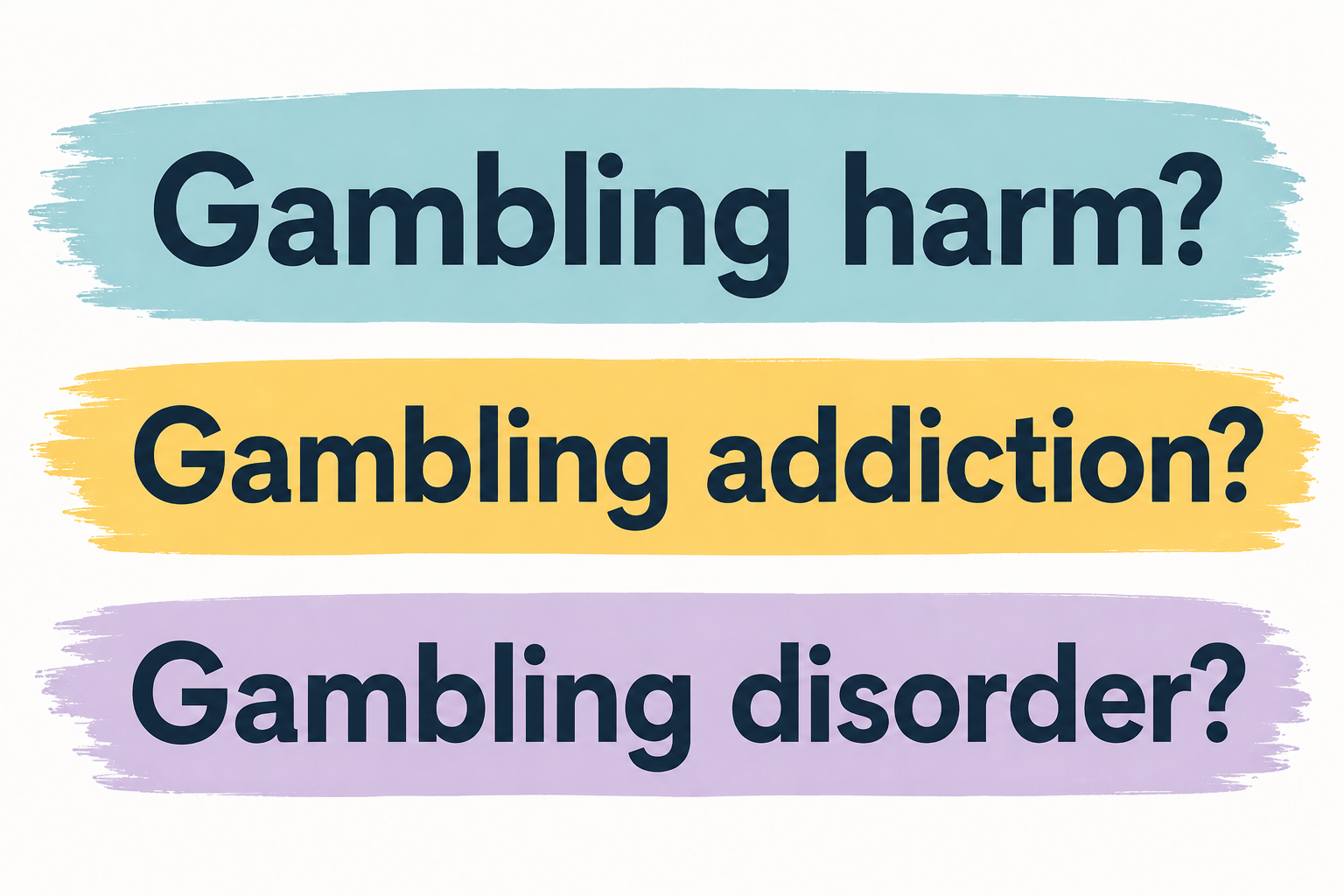
If you've ever searched for help with gambling, you've probably come across a range of different terms. You might have seen terms such as gambling addiction, gambling disorder, compulsive gambling, problem gambling, gambling problems, gambling harm, or gambling-related harm. They are often used interchangeably, so does the language we use really matter?
I believe it does.
The words we choose can influence how we understand ourselves, how others see us, and whether we feel able to reach out for support. They can shape conversations, reduce or increase stigma, and affect how we respond to people's experiences.
Gambling Addiction
For many people, gambling addiction is the term that feels most familiar. It describes a relationship with gambling that has become addictive and difficult to control, despite the negative consequences.
Some people identify with the word addiction because it reflects how gambling can dominate their thoughts, emotions and behaviour despite their desire to stop. It acknowledges that gambling isn't simply a matter of lacking willpower or making poor decisions. Instead, it recognises that repeated gambling can alter the brain's reward and learning systems, making urges feel increasingly difficult to resist.
However, not everyone is comfortable with the label. Some people feel that being described as ‘an addict’ becomes part of their identity rather than describing something they are experiencing. Others note that the word carries judgement or shame.
This is why, in counselling, I use the language that feels right for each individual.
Gambling Disorder
Gambling disorder is recognised as a diagnosable mental health condition in both the DSM-5-TR and ICD-11, where it is classified as a disorder due to addictive behaviours (often described as a behavioural addiction).
The benefit of this term is that it recognises gambling as a genuine mental health condition rather than a moral failing or lack of self-control. For many people, this can be validating.
At the same time, some people dislike medical labels altogether. They may not see themselves as having a ‘disorder’ even though gambling is causing significant difficulties in their lives.
Gambling Harm and Gambling-Related Harm
In recent years, the phrases gambling harm and gambling-related harm have become increasingly common. This reflects a growing public health approach, adopted by organisations such as NICE, which recognises that harm exists on a spectrum and can affect both the person gambling and those around them. Rather than waiting until someone meets the criteria for a diagnosable disorder, this approach encourages earlier recognition and support.
This shifts the focus away from whether someone meets the criteria for an addiction or disorder and instead asks a different question:
Is gambling causing harm?
That harm may be financial, emotional, psychological, physical, social, or occupational. It might affect relationships, confidence, sleep, work, or mental wellbeing.
These terms also recognise that gambling doesn't just affect the person who gambles. Partners, children, parents, friends, employers, and wider communities can all experience significant consequences. Financial stress, relationship conflict, secrecy, anxiety, loss of trust, and emotional exhaustion often extend well beyond the individual, which means support should also be available for those impacted by someone else's gambling, not just the person who gambles.
Importantly, gambling harm can exist long before someone would describe themselves as addicted.
This broader language can encourage people to seek support earlier, rather than waiting until things become unbearable.
What About Problem Gambling?
Problem gambling has traditionally been used to describe gambling that causes negative consequences, whether or not someone meets the criteria for gambling disorder. Some people prefer this term because it feels less clinical than 'disorder' and less identity-based than 'addiction'. Others feel it minimises the seriousness of what they're experiencing. Like many of these terms, its usefulness often depends on the individual and the context.
Although the term remains widely recognised, some organisations increasingly use gambling-related harm because it captures a broader range of experiences.
So Which Term Is Best?
The answer is: it depends.
Different settings use different language for different reasons.
- Healthcare professionals may use gambling disorder.
- Researchers and public health organisations often refer to gambling harm or gambling-related harm.
- Many people simply describe their experience as having a gambling problem.
Rather than focusing on finding the ‘right’ label, I believe it's more important to understand the person's experience.
Whatever words you use, if gambling is causing distress, impacting your relationships, affecting your finances, or leaving you feeling trapped, your experience matters.
You don't need to prove that your gambling is ‘bad enough’ before asking for help.
Language Should Reduce Shame, Not Increase It
One of the biggest barriers to seeking support is shame.
People often tell themselves:
- ‘I'm just weak’
- ‘I should be able to stop’
- ‘I've got myself into this mess. I need to get myself out of it’
These beliefs can keep people isolated for months or even years.
Compassionate, non-judgemental language can help reduce that shame. It reminds us that gambling difficulties are complex, often influenced by stress, trauma, mental health, life experiences, the wider gambling environment, and not simply a lack of willpower.
The most important step is not finding the perfect word, it is recognising when gambling is affecting your life and knowing that support is available.
At Sunrise Recovery
At Sunrise Recovery, I don't believe people should be defined by a label.
Whether you're worried about your own gambling or you're living with the impact of someone else's gambling, counselling offers a safe, confidential space to explore what's happening without judgement.
The words we use matter because they can either open the door to understanding or reinforce shame.
Recovery begins with being heard, not with being labelled.
Contact me for support with someone who understands.
Frequently Asked Questions
Is gambling addiction the same as gambling disorder?
Gambling addiction is a commonly used term, while gambling disorder is the clinical term used in diagnostic systems such as DSM-5-TR and ICD-11.
What is gambling-related harm?
Gambling-related harm refers to the negative impacts gambling can have on individuals, families, relationships, finances, health and communities.
What is the difference between gambling harm and gambling addiction?
Gambling addiction refers to a pattern of gambling that has become difficult to control despite negative consequences. Gambling harm is a broader term that includes any negative impact caused by gambling.
Do I need to be addicted to gambling before seeking help?
No, support is available whenever gambling is causing distress or affecting your life